Fragmented systems
Transport information and control environments have evolved independently by mode, entity, operator and sphere of government.
TODAY →

A national digital transformation proposition to connect mobility, roads, rail, freight, ports, aviation, safety, energy and transport intelligence into one interoperable operating environment.
The national opportunity is to create the interoperability layer that makes existing and future roads, railways, public transport networks, ports, airports, freight corridors and institutional systems work together digitally.
Transport information and control environments have evolved independently by mode, entity, operator and sphere of government.
TransportOS connects authoritative source systems through APIs, shared standards, identity federation and trusted data exchange.
Government gains cross-modal visibility, predictive intelligence and a common operating picture while institutions retain lawful control.
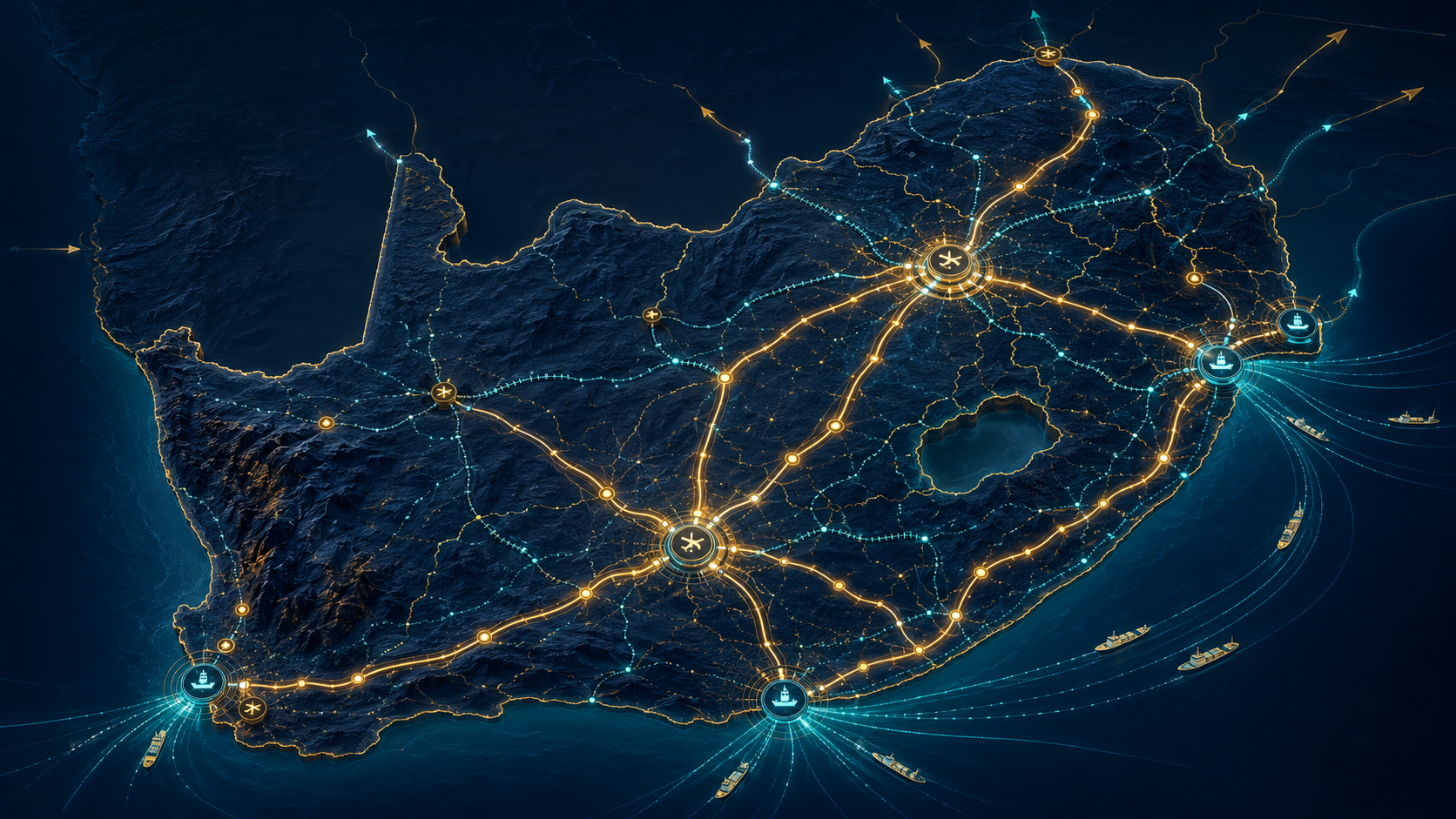
TransportOS South Africa™ becomes the national integration, orchestration and intelligence layer — designed around open standards, data sovereignty and multi-vendor interoperability.
Existing transport systems remain authoritative. TransportOS establishes controlled interoperability, common standards and national situational awareness.
The proposed Control Tower federates information from entity, provincial, metropolitan, corridor and modal control environments — without duplicating their operational mandates.
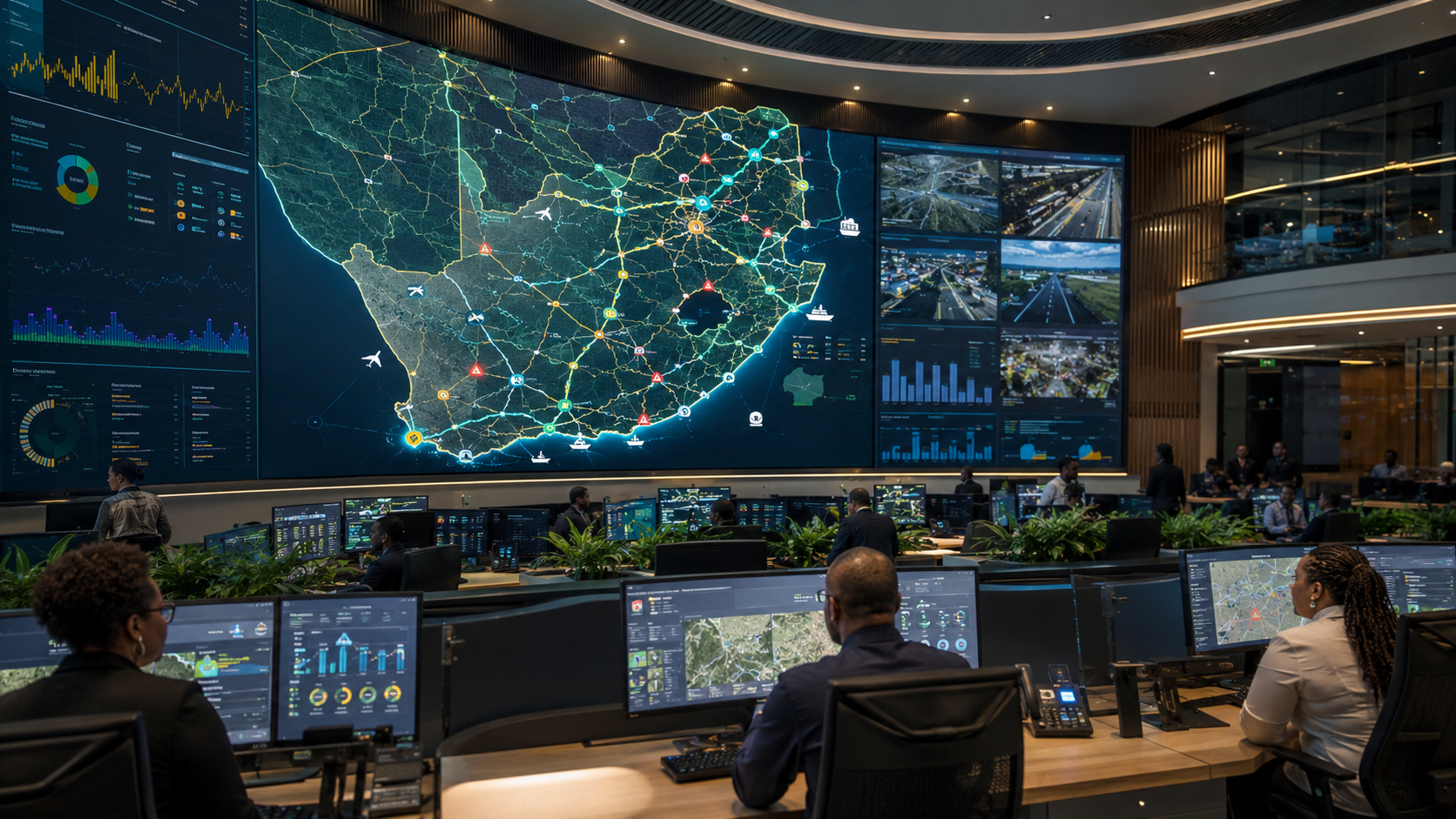
Each grid represents an investment and transformation portfolio. They share the same integration, data, cybersecurity, identity and performance architecture.
Journey planning, interoperable payments, passenger information, taxi digitalisation, e-hailing integration and public transport performance.
Road digital twin, intelligent transport systems, traffic operations, asset condition, maintenance and incident management.
Passenger and freight rail digitalisation, capacity visibility, path coordination, predictive asset management and multimodal interfaces.
End-to-end cargo visibility across shipper, road, rail, terminal, port, airport, warehouse, customs and border interfaces.
Port community integration across terminal, shipping, rail, truck, customs and cargo owners.
Airport passenger, air-cargo, surface mobility and asset intelligence integrated into the national transport environment.
Crash intelligence, driver and fleet risk, intelligent enforcement support, incident coordination and infrastructure security.
EV and fleet charging, depots, battery storage and clean mobility energy planning connected to transport demand.
The sovereign information layer beneath every grid: APIs, event streaming, GIS, digital twin, analytics, forecasting, optimisation and simulation.

A passenger should be able to move from taxi to rail to BRT to e-hailing using interoperable information, identity and payment services — while each operator remains commercially and operationally distinct.
Corridor deployment creates measurable national benefits before full-scale rollout and provides a controlled path from pilot to system-wide adoption.
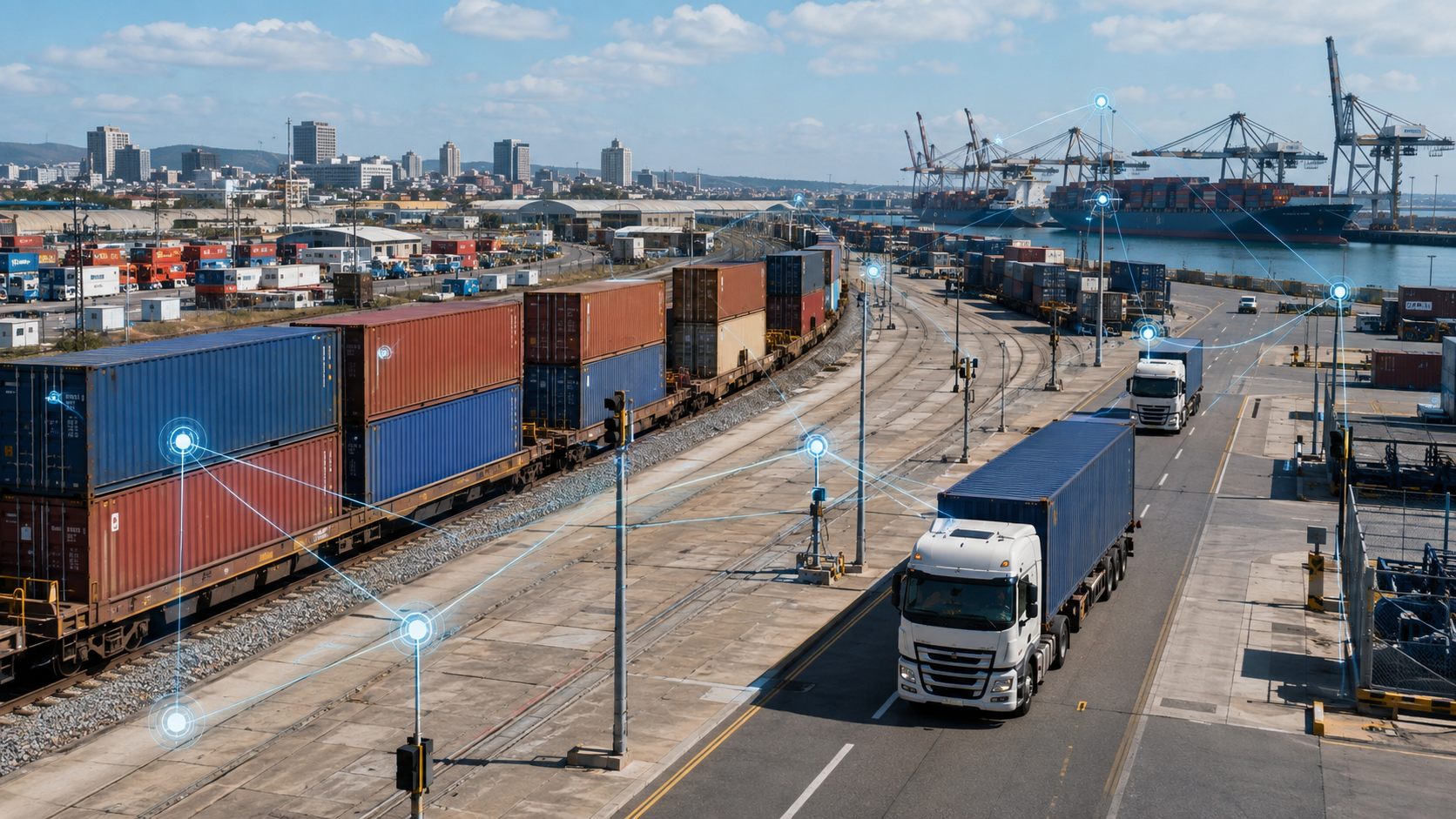
Factory → warehouse → truck → rail terminal → port → vessel becomes one digitally traceable operating chain with common exception management, predicted arrival times and performance intelligence.

The proposed pathway begins with Department-led discovery and architecture, followed by controlled pilots, priority corridor deployment and national scaling.
Programme sponsor, policy authority, national architecture owner, standards oversight and benefits owner.
Retain lawful operational authority, source-system ownership and service-delivery responsibility.
Public budgets, DFIs, PPP capital, infrastructure funds, climate finance and revenue-backed modules where appropriate.
Authoritative data remains under institutional custodianship with controlled exchange, POPIA compliance and auditability.
Zero Trust, OT security, SOC integration, resilience and critical-infrastructure protection from architecture stage.
Local software, systems integration, AI, cybersecurity, IoT, engineering, maintenance, training and supplier development.
Proposed as programme originators and development partners for the initial Department engagement — shaping the strategy, architecture, institutional model, feasibility, commercial pathway and localisation framework.
The proposition deliberately starts with the Department's priorities. The next stage is a controlled development process that validates scope, systems, architecture, economics, funding, pilots and implementation before any major capital decision.
Integrated transport. Digital infrastructure. National intelligence. Economic competitiveness.